Russia’s only crewed-mission launch site has suffered major damage following a rocket launch on Thursday.
The Baikonur Cosmodrome in Kazakhstan will be unable to host launches until repairs are made, according to the space agency Roscosmos, marking the first time in decades that Russia has lost the ability to send people to space.
The launch of the Soyuz MS-28 spacecraft was otherwise successful, with none of the crew members injured.
The three-person crew, which included Nasa astronaut Chris Williams and two Russian crewmates, made it safely to the International Space Station (ISS) on Thursday evening.
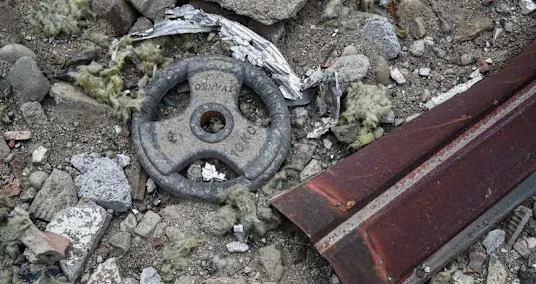
Roscosmos shared footage of the launch, which showed part of the launchpad collapse into an exhaust trench below as a result of the rocket’s blast.
The space agency said that “damage to a number of elements of the launchpad was detected” following the launch.
“The launch complex’s condition is currently being assessed,” Roscosmos told state media. “All necessary backup components are available for restoration, and the damage will be repaired in the near future.”
The Independent has reached out to Roscosmos for more information.
Analysts have questioned the timeframe for repairs, with critical cabling, sensors and other sections of the launchpad’s service bay believed to be destroyed.
“This is the only launchpad Roscosmos uses for the ISS program, and in the future it was supposed to be used for launches to the Russian Orbital Station,” Russian space commentator Vitaliy Egorov wrote on Telegram.
“In effect, from this day Russia has lost the ability to launch humans into space, something that has not happened since 1961. Now it will be necessary to quickly repair this launchpad or modernise another one.”
The Soyuz crew will spend eight months aboard the ISS before returning to Earth in July 2026.
Russia is currently developing its own independent orbital outpost, called the Russian Orbital Service Station (ROSS), with the ISS set to be decommissioned in 2030.
The first ROSS module is planned for launch in 2027.
LATEST POSTS
- 1
 Israel says Iran's military industry will be destroyed 'within days'
 - 2A Sweet Choice: Pick Your #1 Cake!
- 3'War is not over': Detailed diagrams of prisons found in cells of Oct. 7 terrorists
- 4Satellite constellations could obscure most space telescope observations by late 2030s: 'That part of the image will be forever lost'
- 5Figure out How to Amplify the Resale Worth of Your Kona SUV


- The Delight of Perusing: Book Proposals for Each Class
- Israel approves 19 new West Bank settlements in major annexation push
- Qantas and Virgin Australia Ban Power Bank Usage on Flights Following Safety Incidents
- Novartis to build manufacturing hub in North Carolina, creating 700 jobs
- Step by step instructions to Pick an Incineration Urn: Variables to Consider
- Senegal president signs tough new anti-LGBT law doubling jail terms
- Warming winters lead to more nitrate pollution in the drinking water near farms
- How did Ariana Grande get her Glinda voice? I’m the man behind the magic.
- The next frontier in space is closer than you think – welcome to the world of very low Earth orbit satellites